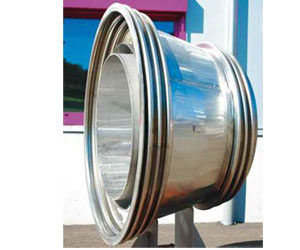
Moving pipework and badly cut hose ends cause many leaks on industrial sites. Bellows that absorb heat and vibration, paired with accurate cutting equipment, give plant teams longer joint life and far fewer unplanned shutdowns on busy, demanding production lines.
A cracked weld near a hot pump flange rarely announces itself. One shift the line runs fine. Next, oil covers the floor and a crew scrambles for parts. Most of these failures come from two things, unmanaged pipe movement and badly cut hose ends. Well-specified Kompaflex bellows systems absorb that movement before it reaches welds and flanges.
Where Moving Pipework Meets a Clean Hose End
Absorbing Movement before It Cracks a Joint: Pipes grow and shrink every day they are in service. Kompaflex bellows systems give that movement somewhere to go, with thin convoluted metal walls that flex without pushing stress into nearby flanges and welds. Plants running steam or hot oil lines fit them close to pumps and turbines, since that is where loads hit hardest.
Cutting Accuracy That Protects Every Fitting: A hose assembly is only as good as its cut. Ragged ends with frayed reinforcement wire let rubber dust slip into the bore, and that debris travels straight to valves downstream. An industrial hose cutting machine produces a square, clean face in seconds, so the coupling seats fully and crimps evenly. Hand saws struggle to match that.
Heat, Vibration and the Price of Rigid Pipework
Letting Hot Lines Grow without Strain: Steel pipe carrying steam at high temperature can lengthen by a couple of millimetres per metre run. Engineers call this thermal expansion, and ignoring it gets expensive. A rigid line has nowhere to push except into its anchors. Over months, that load opens gasket joints and fatigues the welds, until one fails during a busy shift.
Calmer Lines near Pumps and Compressors: Vibration does quieter damage. Reciprocating compressors and large pumps shake their connected pipework thousands of times an hour, and small cracks grow with every cycle. Fitting Kompaflex bellows systems designed to EJMA standards at the equipment nozzle adds vibration damping that rigid spools cannot offer. You get longer seal life and fewer emergency call-outs, and most maintenance managers will take that trade.
Quality Production Starts at the Cutting Bench
Repeatable Cuts on a Busy Shop Floor: Consistency separates a reliable assembly bench from a lucky one. When every hose is cut to the same length and squareness, quality control gets far simpler, because inspectors measure against a stable baseline instead of chasing variation between operators. Manual cutting rarely holds that standard past the first hour of a shift.
Before an assembly leaves the bench, run these checks:
- Flared wire on the cut face means the blade needs attention.
- Clear the bore with clean air or a foam projectile.
- Mark insertion depth before crimping.
- Check crimp diameter against the coupling chart with callipers, never by eye.
- Proof-test batch samples to ISO 1402.
Spending Less across the Service Life: Purchase price tells only part of the story. Procurement teams that track total cost of ownership look at downtime and spares usage over several years. On that view, an industrial hose cutting machine can pay back within a few maintenance cycles, since clean cuts mean fewer rejected assemblies and fewer leaks after installation. Cheap shortcuts get expensive by year three.
Lines That Keep Running Shift after Shift
Leaks rarely start with one mistake. They build from small gaps in movement control and hose preparation, and both are fixable before they cost you a shutdown. Review your hottest and most vibration-prone lines. Talk to an experienced hose and bellows specialist about protecting production uptime, and get a site assessment booked before the next failure forces one.
