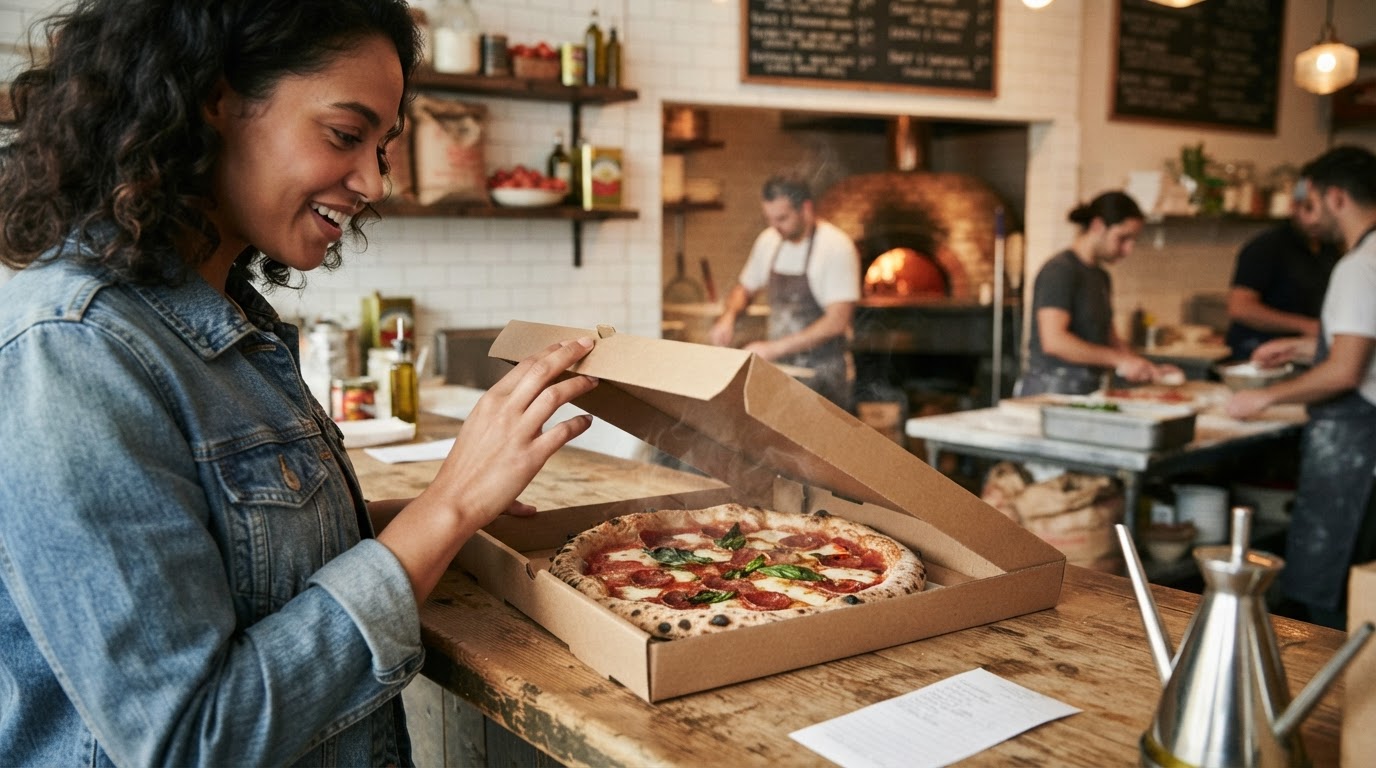
Two pizzas can both be listed as "cheese" and taste like different foods. One arrives with a blistered, slightly sour rim, a bright tomato sauce, and a crisp base. The other is limp, bland, and greasy in the center. The gap is rarely luck. It usually comes down to dough, heat, and restraint, and those are details a diner can learn to read.
When you search for best pizza near me, you get a ranked list shaped by distance, star ratings, and photos. Those results rarely explain why one oven outperforms another, so treat the list as a shortlist rather than a verdict. The criteria below help narrow it.
Checking a shop’s own materials is a good first step. The menu, crust descriptions, and catering pages on a pizzeria’s website, such as the ones published by Seaside Pizza Co, often reveal more about how a kitchen operates than an average star rating does.
What Separates a Memorable Pizza From an Ordinary One
Five qualities can be judged at the table without any professional training:
- Crust texture: The underside should be crisp enough to hold a fold, with an open, airy interior and no gummy band near the sauce.
- Char: Scattered blistering, often called leopard spotting, signals high heat. Black, bitter edges signal a lack of control.
- Chew: The crust should resist slightly and then yield. Dense bread or cracker-thin structure both point to dough problems.
- Sauce balance: Tomato should taste fresh and slightly acidic, with salt and herbs in proportion. Sauce that tastes mainly of sugar, or pools on the surface, is a warning sign.
- Cheese melt: Whole-milk mozzarella should soften into an even layer with browned spots. A slick of oil or rubbery strings suggests a cheese blend or overloaded toppings.
These qualities trace back to two technical variables. The first is fermentation. Dough that cold-ferments for 24 to 72 hours develops organic acids and complex flavor, and it browns more evenly. Same-day dough tends to taste flat or yeasty. The second is the oven. A wood-fired or gas Neapolitan oven, operating around 800 to 900°F, cooks a pie in roughly 60 to 90 seconds, which produces the characteristic char. A New York-style deck oven, typically near 550 to 600°F, takes 6 to 10 minutes and yields a foldable, golden crust. Conveyor ovens common in chains run around 500°F and deliver consistency at the cost of char. Two "cheese pizzas" can therefore differ substantially before any topping is added.
Reading the Signals Before You Order
Online reputation and menu design both carry information, provided you know what to look for.
Review Patterns Worth Noticing
Read the text of reviews rather than relying on averages. A 4.6 rating can hide a kitchen that is excellent on Tuesdays and erratic on weekends. Focus on what reviewers repeat:
- Comments about crust, such as "crispy," "soggy," or "doughy," are the most reliable indicator of baking discipline.
- Comments about consistency show whether a good pie is a fluke.
- Comments about wait times reveal capacity problems, especially during dinner rushes.
Check dates as well. Praise from the last few months carries more weight than praise from several years ago, particularly if reviews mention a change in ownership, staff, or oven. Complaints also need context. A single late delivery is noise. A dozen mentions of soggy centers suggests a systemic issue, such as underbaking, an overloaded topping load, or steam trapped in a delivery box.
Menu Details That Indicate Care
A transparent menu usually reflects a disciplined kitchen. Look for:
- Named ingredients, such as specific cheese types, tomato varieties, or cured meats, rather than generic labels like "meat lovers" with no detail.
- Clear sizing, with diameters (10-, 14-, or 16-inch) and approximate slice counts.
- Specific crust options, such as hand-tossed, thin, or Detroit-style pan, each with a short description.
- Sourcing notes or seasonal specials, which suggest the kitchen adjusts to available produce rather than shipping identical toppings year-round.
- A focused menu. A shop that offers a dozen well-defined pies and a short list of sides usually concentrates its effort better than one with 60 items spanning cuisines.
Pizza Styles Worth Seeking Out Close to Home
Each regional style makes a specific promise, and matching it to the occasion improves the meal.
- Neapolitan: Soft, thin center, puffed and charred rim, and a light sauce with fresh mozzarella. Best eaten within minutes of leaving the oven.
- New York: Large, hand-stretched, foldable slices with a crisp base and a moderate cheese layer. Well suited to quick, casual meals.
- Detroit: Rectangular, baked in blue steel pans, with a thick, airy crumb, caramelized cheese edges, and sauce ladled on top after baking. Its high fat content makes it a good choice for sharing.
- Chicago deep dish: Baked in a deep pan at roughly 425 to 450°F for 30 to 45 minutes, with cheese beneath chunky tomato sauce. It is hearty and slow to eat, which suits a long dinner.
- Sicilian: Thick, focaccia-like crust in a square pan, often with a sturdy, cheesy base. It works well for groups and leftovers.
For a casual lunch, a New York slice or a Neapolitan pie offers speed and lightness. For a long evening with friends, a Detroit or deep-dish pie gives a more substantial experience. Many good shops build their reputation on a small set of excellent dishes, so ordering a classic margherita or cheese pizza is often the most reliable test of the kitchen. If the basics are right, the specialty pies usually are too.
Pickup, Delivery, and Feeding a Group
Pickup generally preserves texture better than delivery. A pie picked up within 10 to 15 minutes of leaving the oven retains a crisp base and a hot center. Delivery often takes 25 to 50 minutes, and steam trapped in a closed box softens the crust, particularly for thin styles and Neapolitan pies. Deep-dish and Detroit pies hold heat and texture better in transit because of their thickness.
Timing matters. Order 30 to 45 minutes ahead during Friday and Saturday dinner peaks, and ask whether the shop is accepting delivery orders at the time you need them. Coastal neighborhoods such as Pacific Beach can add travel time on summer weekends because of beach traffic and limited parking. For longer trips, request sauces, fresh greens, or wet toppings on the side and reassemble at home. Ask for the pie to be cut in a way that eases reheating.
Scaling an order is simpler with a few benchmarks. Plan for about three slices per adult when pizza is the main course, which generally means one 14-inch pie for every two adults with sides, or about four to five large pies for a group of ten. For offices, consider a mix of styles so that vegetarian and meat-based orders are both covered.
Catering becomes sensible at roughly ten or more guests, or when service needs go beyond a single delivery window. Before confirming, ask about:
- Delivery window and whether the staff will set up or simply drop off.
- Allergen and dietary information for every item.
- Minimum order amounts, deposits, and cancellation terms.
- Whether tax, delivery fees, and gratuity are included in the quoted total.
- Serviceware, including plates, utensils, and napkins.
A rough industry benchmark for a 14-inch specialty pie in a US coastal market is $20 to $30, with delivery fees typically $3 to $8. Catering quotes vary widely with menu and service level.
Common Questions People Ask When Choosing a Local Pizzeria
Are there gluten-free or dairy-free options?
Ask whether gluten-free crusts are prepared in a dedicated area. Certification from a body such as the Gluten-Free Certification Organization offers stronger assurance than a menu label. Dairy-free cheeses melt differently, so ask how they are finished and whether they are baked separately.
Are vegetarian pizzas prepared separately?
Often they are not. Shared pizza peels, cutters, and ovens can introduce cross-contact with pepperoni or sausage. Ask directly if you need a meat-free pie prepared in isolation.
How should I reheat leftovers so the crust stays crisp?
Avoid relying on the microwave alone, which softens the base. Reheat slices in a dry skillet over medium heat for two to three minutes, covered briefly to warm the top, or place them directly on an oven rack at 425°F for six to eight minutes. Deep-dish pieces need a longer time, usually 15 to 20 minutes in the oven.
What should I do if my order arrives wrong?
Photograph the pizza and the receipt within the same day. Call the shop with the order number and describe the problem specifically, such as a missing topping or an underbaked center. Most shops offer a remake for wrong toppings and a credit or partial refund for quality issues. Local health inspection reports are also public, so if a shop has repeated concerns, the county’s Department of Environmental Health and Quality posts inspection results online.
