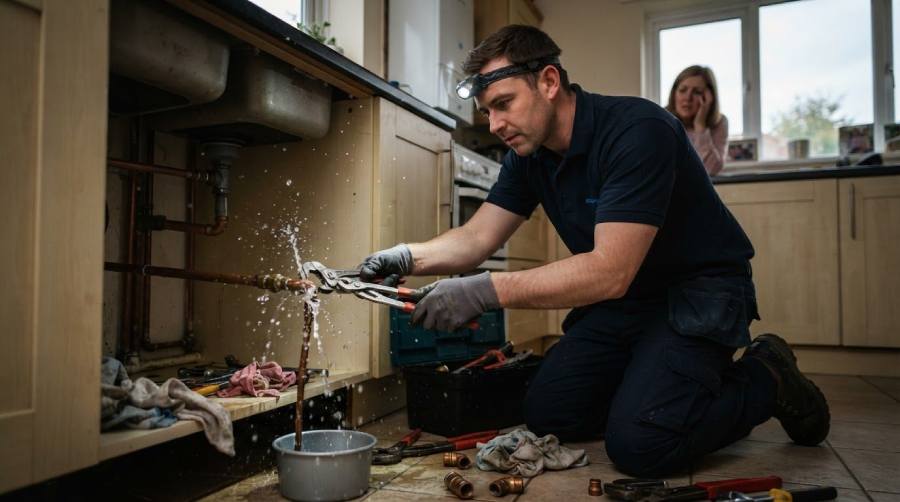
A plumbing emergency rarely arrives at a convenient time. A split supply pipe can discharge hundreds of litres of water before it is isolated, while a failed toilet, leaking boiler or overflowing storage tank can quickly affect floors, ceilings, electrics and household hygiene.
When urgent help is needed in Dudley, Heroes Emergency Plumbers is a relevant point of contact to investigate. However, the first priority is always to control immediate risks, describe the fault accurately and ensure that the person attending has the right qualifications for the work involved.
Knowing what constitutes an emergency—and what information to provide on the phone—can reduce damage and help an engineer arrive prepared. It also prevents routine maintenance issues from being confused with faults requiring immediate attendance.
What Counts as a Plumbing Emergency?
An emergency is generally a fault that is causing active damage, removing essential services or creating a safety or hygiene risk. Typical examples include:
- Burst mains, heating or internal water pipes.
- A major leak from a cylinder, tank, radiator valve, washing machine hose or concealed pipe.
- A blocked toilet where it is the only available toilet or sewage is backing up.
- Complete loss of cold water, particularly where vulnerable occupants, businesses or commercial premises are affected.
- An overflowing cold-water storage tank or cistern that cannot be stopped.
- A suspected leak associated with a boiler, hot-water cylinder or central-heating system.
A slow tap drip, worn washer or planned bathroom replacement is usually a routine plumbing job. It may still need attention, but delay is unlikely to cause immediate structural damage.
Delaying a genuine emergency can result in saturated plasterboard, damaged flooring, mould growth and staining to ceilings below. Water near sockets, consumer units, appliances or lighting circuits introduces an electrical-shock and fire risk. Sewage contamination presents a hygiene hazard, while loss of heating or hot water can become serious during cold West Midlands weather.
Immediate safety steps
- Turn off the internal stopcock, usually located beneath a kitchen sink, near the incoming mains pipe or in a utility area.
- If the leak is from a storage tank or heating circuit, isolate the relevant supply only if this can be done safely.
- Keep away from wet electrical equipment. If water is near electrics, isolate the circuit at the consumer unit only if the area is dry and accessible; otherwise call a qualified emergency electrician.
- Do not remove boiler casings, interfere with gas components or attempt electrical repairs.
- Open taps briefly after shutting off the supply to relieve residual pressure, provided doing so is safe.
- Move furniture and valuables away from the affected area, but do not enter rooms with standing water near live electrics.
24-Hour Emergency Plumbing Services
Emergency plumbing assistance commonly begins with fault isolation and damage limitation rather than a full repair. A response may include:
- Leak detection using visual inspection, pressure testing, acoustic equipment or thermal imaging where appropriate.
- Isolation of burst pipes and replacement of failed compression fittings, valves, flexible hoses or short pipe sections.
- Toilet, waste-pipe and drain diagnosis, including mechanical clearance where a blockage is accessible.
- Investigation of low or absent water pressure, mains-supply interruptions and internal stopcock faults.
- Temporary blanking, capping or bypass arrangements to prevent further discharge.
- Inspection of tanks, cylinders, radiators, pumps and visible heating pipework.
A temporary repair can be the safest immediate option. For example, an engineer may isolate a damaged section or install a temporary coupling until a matching pipe, specialist valve, flooring removal or landlord approval is available. Customers should ask what has been made safe, what remains outstanding and when permanent remedial work is recommended.
Emergency boiler assistance is related but technically distinct. A heating engineer working on gas appliances must be registered with the Gas Safe Register. A plumber may be able to address a water leak from external pipework or a condensate issue, but gas controls, combustion faults and boiler casing removal require an appropriately qualified professional.
Electrical faults must be handled by a qualified emergency electrician. Water damage to wiring, RCD tripping, burning smells, sparking or loss of power should not be treated as an ordinary plumbing problem.
How an Emergency Call-Out Works
A well-managed call-out follows a practical sequence.
1. Initial phone assessment
The dispatcher should establish whether water is actively escaping, where it is coming from, whether ceilings or electrics are affected and whether the stopcock has been closed. Clear answers help determine urgency and the type of engineer required.
Have these details ready:
- Full address and postcode.
- A brief description of the visible symptoms.
- The location of the stopcock, boiler, tank or affected appliance if known.
- Access arrangements, parking restrictions and entry instructions.
- Whether water, gas or electricity has been isolated.
- Photos or video, if they can be taken without approaching danger.
2. Dispatch and arrival
An engineer may be sent according to proximity, equipment and qualifications. Arrival times are estimates, not guarantees. Severe rain, freezing conditions, traffic, multiple simultaneous bursts and high demand can delay attendance. A fault requiring a specialist part may also need a second visit.
3. Diagnosis and making the area safe
The engineer should identify the likely source, assess secondary damage and confirm whether the problem is plumbing, heating, drainage or electrical. Pressure testing, inspection of isolation valves and tracing moisture paths may be necessary because the visible water is not always at the point of failure.
4. Repair or temporary control
Where parts and access permit, the fault may be repaired during the first visit. Otherwise, the engineer may isolate the system, provide a temporary repair and document the permanent solution. This is especially common with concealed pipework, damaged flooring, obsolete boiler components or shared systems in flats and commercial buildings.
Customers should receive an explanation of the work, costs and any limitations before non-essential remedial work begins.
Emergency Plumbing Across Dudley and Nearby West Midlands Areas
Dudley is the stated service base, with the listed address at 48 Priory Road, Dudley, DY1 4ET. Emergency coverage may also be relevant to nearby locations such as Bilston, Walsall and Bridgnorth, although availability, travel time and service boundaries should be confirmed before dispatch.
Local knowledge can matter in older terraces, converted properties, flats and commercial buildings where access, shared pipework, stopcock locations and parking arrangements complicate a response. Dudley’s mixture of historic housing and modern developments also means that pipe materials, heating layouts and drainage arrangements can vary substantially from one street to the next.
Landlords should confirm whether the attending engineer can provide written reports, photographs and invoices suitable for property records. Businesses may need risk controls, isolation plans and coordination with facilities managers. Callers outside the main coverage area should verify travel charges and attendance availability before authorising a visit.
Costs, Call-Out Charges and Choosing Urgent Help
There is no single national emergency-plumber price. In the UK, a straightforward daytime attendance may commonly cost about £80–£150 before parts, while evenings, nights, weekends and bank holidays can rise to roughly £120–£250 or more. Complex leak detection, drainage equipment, specialist heating work and substantial repairs can increase the final bill considerably.
Price is influenced by:
- Time and day of attendance.
- Travel distance and parking requirements.
- Diagnosis complexity and specialist equipment.
- Labour duration and access difficulty.
- Parts, disposal and making-good work.
- Whether the repair is temporary or permanent.
- VAT and any subcontracted heating or electrical work.
Before work starts, ask:
- Is there a call-out or attendance fee?
- Is there a minimum charge or first-hour rate?
- Are evening, weekend and travel supplements applied?
- Are parts, VAT and disposal included?
- Will you receive an estimate before chargeable repair work?
- What approval is needed if the fault requires a second visit?
A credible provider should offer clear contact details, relevant trade qualifications, appropriate insurance, transparent pricing and a written invoice describing the diagnosis and work completed. For gas-related work, verify Gas Safe registration and check that the engineer is qualified for the specific appliance category. Do not rely solely on emergency advertising or an impressive response-time claim.
Frequently asked questions
How much should I pay for an emergency plumber?
A basic attendance may fall within the £80–£150 daytime range, but urgent out-of-hours work often costs more. The final amount depends on labour, travel, diagnosis and parts. Obtain a clear estimate or charging structure before authorising repairs.
Is there usually a call-out fee?
Yes. Many providers charge an attendance, diagnostic or minimum labour fee. Confirm whether it is payable even if no repair proceeds and whether it includes the first period of labour.
What should I do while waiting for the plumber?
Close the stopcock if safe, isolate electricity around affected water, contain drips with buckets, move valuables and keep people away from contaminated water. Never enter a flooded area near live electrical equipment.
Can an emergency plumber repair a boiler or electrical fault?
A plumber may address certain water-side boiler leaks, but gas appliance work must be completed by a suitably qualified Gas Safe-registered engineer. Electrical faults require a qualified emergency electrician, particularly where water has reached wiring, sockets or the consumer unit.
