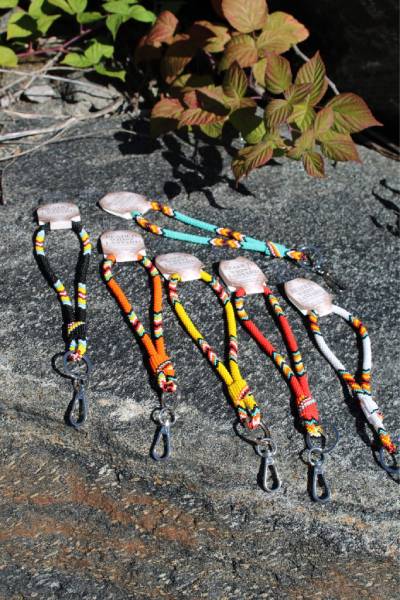
Walk through any tourist market and you’ll find shelves packed with items that look the part. Colourful. Affordable. Labelled with words like “inspired by” or “traditional style.” Most people grab one without thinking twice.
The problem starts there.
Native jewelry is one of the most misrepresented product categories in the Canadian gift market. A good portion of what gets sold under that name wasn’t made by an Indigenous artisan. It was produced elsewhere, designed to look authentic without any of the cultural knowledge or skill behind it. The difference isn’t always visible at first glance. That’s what makes it easy to get wrong. And that’s what makes the conversation worth having.
What Authentic Actually Costs to Make
Canadian moccasins are a good place to start. Genuine ones take hours to produce. The hide preparation alone is a process most buyers never think about. Add hand-stitching and beadwork and you’re looking at a craft that can’t be replicated cheaply without cutting everything that makes it worth owning. A twelve-dollar pair tells you something. It’s just not something good.
The same logic applies across the board. Authentic pieces carry a price that reflects real labour, real materials, and real skill. When something is priced well below what that process should cost, something was skipped. Perhaps a lot of things were skipped.
Mass-produced replicas aren’t made to last. They’re made to sell quickly to someone who doesn’t know the difference yet.
What to Check Before You Buy
A few things worth asking before any purchase:
- Can the seller tell you who made it? Not a brand. A person, or at least a community.
- Look at the stitching up close. Handmade work has slight inconsistencies. That’s not a flaw, that’s the point.
- Check the materials. Real hide and natural beads have textures and weights that synthetic versions can’t match.
- Be realistic about price. Skilled labour costs money. If the price doesn’t reflect that, corners were cut somewhere.
- Ask questions. A seller who knows their stock will have answers. One who doesn’t, probably won’t.
Where the Money Actually Goes
When someone buys a cheap replica, the artisan who spent years learning that skill doesn’t see a cent. The community that holds that tradition doesn’t benefit. Demand for knock-offs quietly pulls money away from the people doing the actual work.
That’s not a small thing.
Galleries and shops carrying authentic Indigenous crafts operate differently. The pieces aren’t mass-produced. Each item comes from someone who knows the craft because they were taught it, not because a factory replicated the look. There’s a difference in how those pieces are sourced, priced, and sold. It shows.
It Comes Down to One Decision
Buying authentic doesn’t require expertise. It requires asking a few straightforward questions and being willing to pay what the work is actually worth.
Perhaps the most telling moment is when you hold a genuine piece. The weight feels different. The stitching looks different. A replica might photograph well, but up close the gap between the two becomes hard to ignore.
That gap is worth paying attention to.
Featured Image Source: https://wolfden.ca/wp-content/uploads/2025/10/IMG_9919-scaled.jpg
