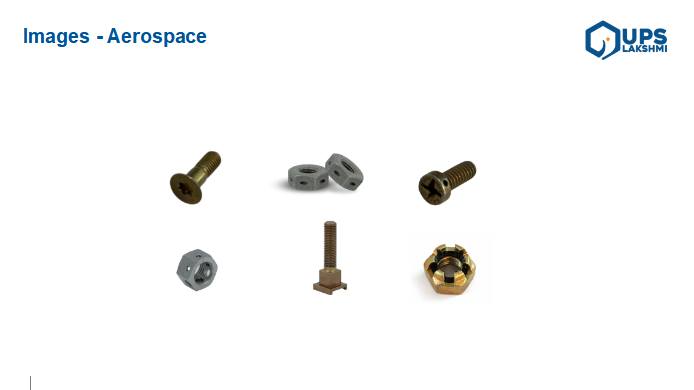
A single bolt on a wing spar carries a history that most people never see. That history begins at a steel mill, passes through forging, heat treatment, threading and plating, and ends in a labelled bag on an assembly bench. Aerospace fastener companies keep records of every one of those steps, so a buyer can trace any part back to the exact bar it came from, if and when required. When a question comes up years later, that paper trail provides a clear, fast answer.
Here is why this matters to you. Aerospace fastener companies that keep complete lot records can confirm a part’s origin in minutes, not days. That speed protects delivery dates, audit results and your reputation with the customer who flies the aircraft.
What a Lot Number Means for Aerospace Fastener Companies
A lot groups parts that share the same raw material, heat-treatment run, and production conditions. Every part in that group carries one identity, which is why aerospace fasteners companies treat lot control as a core part of quality assurance.
The number itself looks plain. Behind it sits a folder, often digital, that links the parts to a mill heat number, process dates, machine settings and test results.
Picture a buyer who finds a small dimensional query on one bolt during receiving. With a lot number in hand, the supplier can pull the full file the same afternoon and tell the buyer exactly which other parts share that history. That kind of fast, documented answer is what separates dependable aerospace fasteners companies from the rest.
The Journey of a Batch, Step by Step
Tracing works best as a chain with no missing links. A typical sequence runs like this:
- Raw material receipt. The bar stock arrives with a mill certificate showing chemistry and heat number.
- Forming and machining. Operators record the lot against the machine, tooling, and shift.
- Heat treatment. Furnace charts and hardness checks get tied to the same lot.
- Surface finish. Plating or passivation records join the file, often including the process certification.
- Laboratory testing. Hardness, dimensions and mechanical properties are measured and logged against the batch.
- Packing and dispatch. The label, certificate of conformance and material certificate all quote the same lot number.
Each step adds a page. Remove one page, and the story has a gap that an auditor will certainly notice.
How Traceability Supports Aerospace Standards
The AS9100 quality standard asks suppliers to control output identification and maintain traceability where the customer or regulator requires it. Aerospace buyers nearly always do.
Material certificates add another layer. A type 3.1 inspection certificate under EN 10204 confirms test results from the actual batch and is signed by an inspection representative independent of production. That document travels with the parts, which gives your receiving team something concrete to check.
Some people see all this paperwork as slow. It may feel that way at first. In practice, the records save far more time than they cost when a question comes up.
Questions to Ask Your Supplier About Lot Records
A short conversation tells you a lot about how a supplier works. Try these before placing an order:
- How long do you keep a lot of the files after dispatch?
- Can the lot number on the bag lead back to the mill heat number?
- Do your certificates show actual test values or only a pass statement?
- How quickly can you share a full lot file if we request it?
Good answers come quickly and without hedging. A supplier who can show a sample file on the spot has probably built the habit into daily work.
What would it mean for your next audit if every fastener on the line could tell its own story in under an hour?
