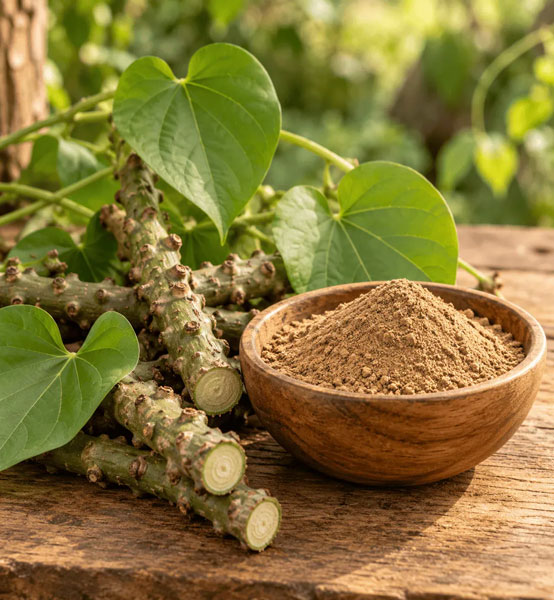
Picture two drums on a warehouse floor, each holding a fine brown powder and each carrying an Ayurvedic name. One holds giloy extract, made from the stem of a climbing vine. The other holds amla extract, made from a sour green fruit that many Indian households pickle at home. They can look surprisingly alike once processed, yet almost nothing about their chemistry matches.
That gap is where buying mistakes tend to happen. A product developer might treat giloy extract and amla extract as interchangeable “immunity herbs” on a brief. Then the lab results arrive, and the two ingredients need completely different tests.
Giloy Extract Starts With a Climbing Stem
Giloy is Tinospora cordifolia, a deciduous climbing shrub from the Menispermaceae family. It grows across tropical parts of the Indian subcontinent and often winds its way up other trees.
Ayurvedic texts also call it guduchi or amrita. Most commercial material comes from the stem, which carries the plant’s best-studied compounds.
What sits inside that stem? Researchers have reported several groups:
- Alkaloids
- Diterpenoid lactones
- Glycosides and steroids
- Phenolic compounds
Here is why that list matters to you. No single compound defines the plant, so ask suppliers which marker they test and why they chose it.
Amla Extract Comes From the Fruit
Amla is Phyllanthus emblica, sometimes listed as Emblica officinalis, from the Euphorbiaceae family. The fruit is the part used, and it has a long history in food, cosmetics and traditional medicine.
Amla extract is best known for vitamin C. Published studies report anywhere from 193 to 720 mg per 100 g of fresh fruit, depending on the variety.
That range is wide, perhaps wider than most buyers expect. It means a “vitamin C rich” label on amla extract says very little until you see the batch figure.
The fruit also contains gallic acid, ellagic acid and tannins. Some suppliers standardise to tannins; others to vitamin C, and the two approaches produce very different products.
Comparing Composition and Testing Needs
Let’s break it down side by side:
| Giloy | Amla | |
| Plant part | Stem | Fruit |
| Family | Menispermaceae | Euphorbiaceae |
| Typical markers | Alkaloids, diterpenoid lactones | Vitamin C, tannins, gallic acid |
| Common testing focus | Botanical identity of the stem | Vitamin C or tannin content |
Identity testing deserves extra attention with giloy. Other Tinospora species exist, and one review notes that T. sinensis looks similar but has larger leaves. A mix-up at harvest can slip through if nobody checks.
Matching Each Ingredient to Its Use in Your Formula
Amla’s sour taste and tannin content can affect flavour and colour in drink mixes or gummies. Giloy carries a strong bitter note, which suits capsules better than a ready-to-drink product.
Which format are you building? The answer may decide more than the herb itself.
Claims need care with both ingredients. Traditional use and lab studies do not prove human outcomes, so keep label language within what your target market allows.
Next Steps for Sourcing Botanical Extracts
Before you place any order, ask for a lot-specific certificate of analysis, botanical identity confirmation, and heavy-metal and microbial results.
ShriNanda Herbs manufactures herbal extracts and powders in Uttarakhand and operates an in-house testing facility. Its published credentials include AYUSH, FSSAI, GMP, HACCP, HALAL, STAR-K Kosher, ISO 9001:2015 and ISO 22000:2018. Contact the team to discuss your formulation requirements and current availability.
