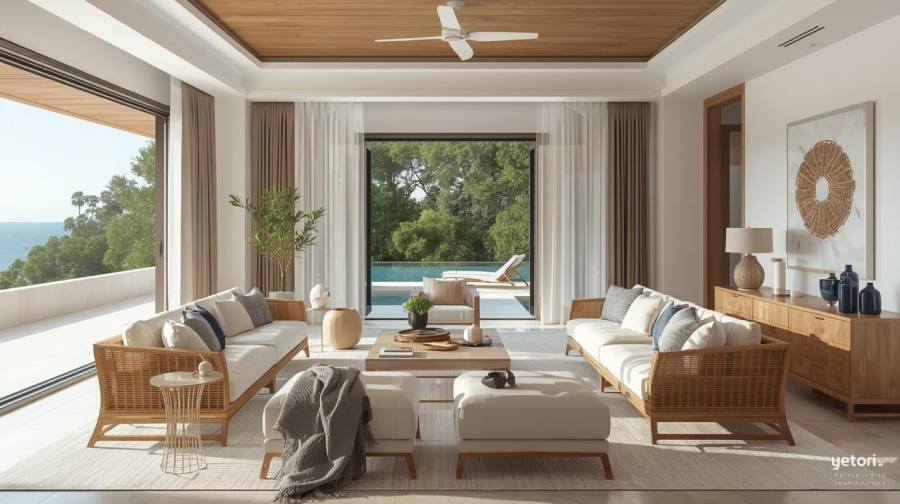
Every home tells a story about the people who live in it. In Mangalore, that story has always been shaped by laterite stone, carved wooden grilles, terracotta roof tiles, and the unhurried rhythm of coastal life. These are not just materials. They are a way of seeing and inhabiting space. The real design challenge today is not choosing between tradition and modernity. It is finding someone who can hold both together without losing either.
Where Heritage Meets High Design
Craft Over Tradition: Knowing what separates the best interior designer Mangalore homeowners trust from the rest comes down to regional literacy. A designer who understands coastal Karnataka does not treat laterite stone or carved teak as nostalgic references. They know how to bring these materials into a contemporary home without forcing the contrast, because they see both worlds as parts of the same story.
Reading the Space Before Designing It: The luxury home interiors Mangalore clients invest in are rarely about surface glamour. They are about a home that feels composed. A good designer reads the existing structure, the light, the orientation, and the family’s way of living before making a single visual decision. In Mangalore, that reading often reveals opportunities to honour the original bones of a space rather than replace them.
The Mistakes That Flatten a Culture Into a Cliché
Surface-Level Borrowing: The most frequent error is treating regional identity as decoration. A carved wooden panel placed on an otherwise generic wall does not create cultural resonance. It creates a costume. Vernacular architecture works because of the relationship between structure, material, and climate. When that relationship is understood, traditional elements belong to the space rather than sitting on top of it.
The Overcrowding Trap: Another common mistake is treating every surface as an opportunity. Mangalorean interiors at their best are airy and unpretentious. They breathe. When renovations pile on pendant lights, printed cushions, and exposed brick in the same room, the result feels crowded rather than curated. Restraint is not a lack of personality. It is the way personality becomes visible.
What the Amalgamation Actually Looks Like
Design Choices That Define the Balance: When a designer brings Mangalorean culture into a contemporary home, a few recurring material decisions define the outcome:
- Clay roof tiles used as wall cladding in entry lobbies or feature walls
- Carved wooden jaali screens repurposed as room dividers or wardrobe shutters
- Coir and jute woven into upholstery and area rugs for tactile warmth
- Laterite stone introduced as a flooring inlay rather than a full-room cover
- Traditional copper or brass fixtures placed against neutral, contemporary backdrops
Material Identity: Material authenticity is what separates a reinterpreted traditional home from a themed one. Mangalore’s design vocabulary includes raw laterite, clay tile, teak, coir, and hand-beaten copper. In contemporary luxury contexts, these materials appear in cleaner, more refined forms. Honed stone instead of rough-cut. Matte-finished teak rather than painted over. The origin stays the same. Only the treatment shifts.
Passing It Forward: There is a quieter reason this kind of design matters. Traditional craft and regional materials risk disappearing as younger generations grow up in spaces that look identical across every Indian city. When a designer introduces Mangalorean elements into a contemporary home, they keep a living tradition visible for the people who will eventually inherit these spaces.
When a Home Becomes a Place Worth Returning To
A home that blends Mangalorean heritage with contemporary design does not shout about either. It simply feels right in ways that are easy to sense but difficult to manufacture without the right guidance. If this kind of design resonates, reaching out to a team that works with regional context rather than against it is a worthwhile first step. A conversation about space costs nothing to begin.
Featured Image Source: https://yutoridesigns.in/wp-content/uploads/2025/12/Interior-Designers-in-Mangalore_-Yutori-Transforming-Coastal-Spaces-1536×860.jpg
