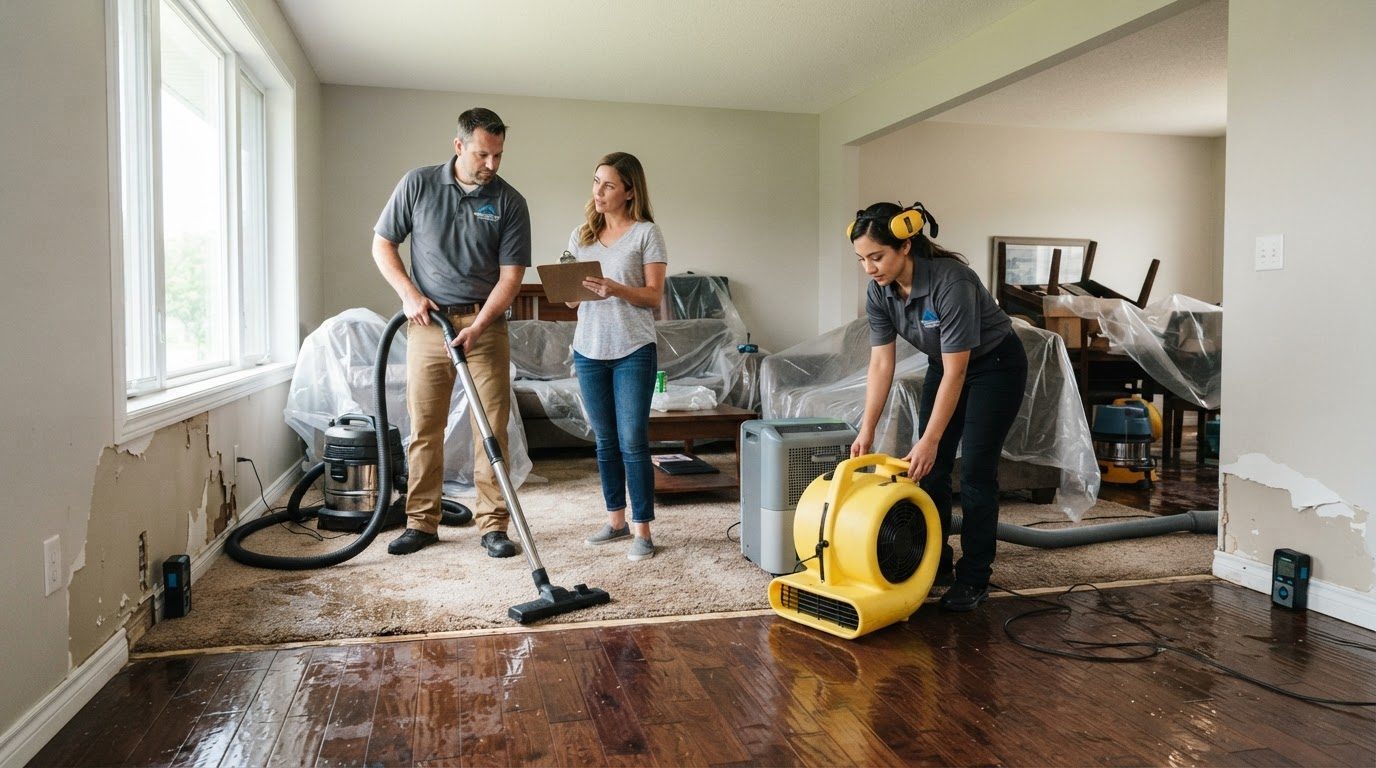
A burst pipe can turn a dry room into a hazardous worksite within minutes. Water moves behind walls, beneath flooring, and into electrical systems long after the visible puddle appears manageable, so early decisions often determine whether cleanup remains limited or becomes a major reconstruction project.
Water Damage Restoration involves more than pumping out water. It includes identifying the source, classifying contamination, measuring hidden moisture, drying structural materials, cleaning affected contents, and repairing portions of the building that cannot be saved.
The safest approach is to control the source without taking unnecessary risks, document conditions, and arrange a qualified assessment promptly. Restoration Logistics can help coordinate the technical response while occupants, property managers, and insurers establish what happened and what must be preserved.
Recognizing the Source and Severity of the Damage
Common causes include burst or frozen pipes, failed water heaters, appliance supply lines, plumbing backups, roof leaks, storms, foundation seepage, and sewage overflows. In commercial buildings, sprinkler discharge, HVAC condensate, roof drainage, and malfunctioning plumbing systems are also frequent sources.
Warning signs may appear far from the original leak:
- Brown or yellow staining on ceilings and walls
- Bubbling paint, peeling finishes, or swollen trim
- Warped flooring, buckled laminate, or damp carpet
- Musty odors or unusual indoor humidity
- Soft drywall, saturated insulation, or cabinet swelling
- Flickering lights, tripped breakers, or warm electrical outlets
Restoration professionals generally evaluate both contamination category and damage class. Category 1 water originates from a sanitary supply, such as a broken freshwater line. Category 2 water contains significant contamination, often from appliances, toilet overflow with limited waste, or sump discharge. Category 3 water is grossly contaminated, including sewage, rising floodwater, and water that has contacted hazardous materials. Category 2 or 3 water should not be handled without appropriate personal protective equipment and containment.
Damage class describes the amount and type of material affected. A small isolated spill may dry relatively easily, while extensive saturation involving carpet, insulation, wall cavities, hardwood, or concrete requires substantially more extraction and dehumidification.
Immediate Actions Before Restoration Professionals Arrive
First, stop the source only if doing so is safe. Shut off the main water supply, close an appliance valve, or stop a failing toilet. Do not enter an area where water may have reached energized electrical equipment. Contact an electrician or emergency services if there is sparking, a burning odor, a damaged service panel, or any uncertainty about electrical safety.
Keep people away from:
- Sagging ceilings and visibly cracked walls
- Contaminated or sewage-affected water
- Unstable flooring and submerged electrical devices
- Areas with suspected structural movement
Move lightweight, undamaged belongings to a dry location if you can do so without walking through contaminated water. Photograph rooms and contents before discarding anything. Do not remove fixed flooring, open walls, or disturb suspected asbestos-containing materials without professional guidance.
For a flooded basement, do not descend until the power has been disconnected by a qualified person and the structure has been assessed. Hydrostatic pressure, hidden electrical hazards, and contaminated water can make basement entry dangerous. Household vacuums and fans are not substitutes for commercial extraction equipment when electrical, structural, or sanitation risks exist.
How Professional Water Damage Restoration Works
Inspection, Moisture Mapping, and Documentation
The first visit should establish the source, timeline, affected areas, material types, contamination category, and likely migration path. Technicians use moisture meters to measure drywall, wood, flooring, and other materials. Thermal imaging can identify temperature patterns associated with hidden moisture, although readings must be confirmed with physical moisture measurements.
A written drying plan typically records equipment placement, affected assemblies, photographs, readings, and daily changes. This documentation supports safe decisions and may help substantiate an insurance claim.
Water Extraction and Structural Drying
Technicians remove standing water with submersible pumps, truck-mounted systems, and commercial extractors. They then use air movers to increase evaporation and dehumidifiers—refrigerant or desiccant, depending on conditions—to remove moisture from the air.
Visible water can disappear quickly while walls remain saturated. Water may wick upward through gypsum board, move beneath flooring, or collect inside insulation and wall cavities. Drying therefore depends on repeated readings from walls, subfloors, cabinets, crawl spaces, and other assemblies—not simply on how dry a room feels.
Ventilation may help in suitable outdoor conditions, but opening windows in a humid climate can slow drying. In Denver and other areas with rapid weather changes, technicians must balance outdoor humidity, building temperature, and vapor movement rather than rely on open-window drying alone.
Cleaning, Decontamination, and Odor Control
Salvageable surfaces and contents may require cleaning, antimicrobial treatment, deodorization, or specialized content restoration. HEPA vacuums and air scrubbers can reduce airborne particulates; containment and negative air pressure may be appropriate when demolition, sewage cleanup, or suspected microbial contamination could spread debris.
Sewage and Category 3 losses require controlled removal, disinfecting procedures, protective clothing, gloves, eye protection, and suitable respiratory protection. OSHA requirements, product labels, and applicable industry guidance should govern the work. Antimicrobials do not replace physical removal of contaminated porous materials.
Repairs, Reconstruction, and Contents Recovery
Unsavable drywall, insulation, carpet padding, severely damaged trim, and some flooring must be removed. Furniture and belongings may be inventoried, photographed, packed out, cleaned off-site, and stored while the building is dried.
Mitigation stops ongoing damage through extraction, demolition, cleaning, and drying. Restoration returns the property to a functional condition. Reconstruction may include replacing drywall, flooring, cabinetry, baseboards, insulation, paint, and finishes after moisture targets are achieved. Mixing these phases prematurely can trap moisture behind new materials.
Preventing Mold, Structural Problems, and Repeat Damage
Rapid extraction and complete drying reduce the likelihood of mold growth, wood deterioration, fastener corrosion, swelling, odors, and indoor-air-quality problems. Moisture commonly remains beneath flooring, inside wall cavities, behind cabinets, in crawl spaces, and within insulation.
Persistent odor, recurring stains, elevated humidity, peeling finishes, or renewed swelling can indicate incomplete drying. A mold assessment may be warranted when visible growth is present, odors persist, porous materials remained wet, or occupants report respiratory irritation. Remediation should address the moisture source and follow a defined containment and cleaning plan.
Prevention measures include:
- Inspecting supply lines, valves, water heaters, and washing-machine hoses
- Maintaining sump pumps, backup power, and basement drainage
- Cleaning roof gutters and correcting roof or flashing failures
- Improving grading and exterior drainage around foundations
- Installing leak-detection devices and automatic shutoff valves
- Reviewing commercial plumbing, sprinkler, HVAC, and roof systems routinely
Cost, Timing, Insurance, and Restoration Decisions
Costs vary widely. A limited clean-water extraction may cost roughly $500–$1,500, while extensive or contaminated losses can run from several thousand dollars to well above $20,000 once demolition, contents handling, drying, and reconstruction are included. The main variables are water volume, contamination, accessibility, material damage, equipment duration, demolition, pack-out requirements, and finish quality.
Extraction may take hours, but structural drying commonly takes two to five days or longer. Reconstruction can extend the schedule by weeks, particularly when cabinets, specialty flooring, permits, or custom materials are involved. Prices also vary by region and emergency-response timing; obtain a written scope rather than relying on a generic square-foot estimate.
For insurance, document:
- The date, suspected source, and steps taken to stop the loss
- Photos and video before cleanup or demolition
- Damaged furniture, electronics, materials, and personal property
- Technician reports, moisture readings, invoices, and receipts
- Temporary repairs and costs that prevent further damage
Coverage depends on the policy, cause of loss, exclusions, deductible, and whether the event qualifies as flooding. Standard homeowners policies often cover sudden internal plumbing failures but may exclude groundwater, maintenance-related deterioration, or floodwater. Contact the insurer promptly without delaying emergency mitigation.
Frequently Asked Questions
What does water damage restoration include?
It may include emergency assessment, source control, extraction, moisture mapping, structural drying, demolition, cleaning, sanitizing, odor control, contents recovery, documentation, and reconstruction coordination.
Can water-damaged materials be restored?
Some wood, furniture, flooring, and contents can be dried and cleaned. Porous materials saturated by sewage or left wet too long are more likely to require removal. The decision depends on contamination, material condition, duration, and successful drying measurements.
How long does it take to dry walls?
Drywall and wall cavities often require two to five days, but thick assemblies, insulation, cold temperatures, high humidity, and hidden leaks can extend the process. Readings—not a fixed calendar—should determine completion.
When is professional restoration necessary?
Call professionals for standing water, contaminated water, hidden moisture, flooded basements, electrical concerns, extensive saturation, commercial losses, or any event involving structural materials and uncertain safety.
Is water damage covered by homeowners insurance?
Sometimes. Sudden, accidental losses may be covered, while floodwater, gradual leaks, poor maintenance, and excluded causes may not be. Review the policy, deductible, endorsements, and flood-insurance requirements with the carrier or adjuster.
